Routhian mechanics
Formulation of classical mechanics
Summary
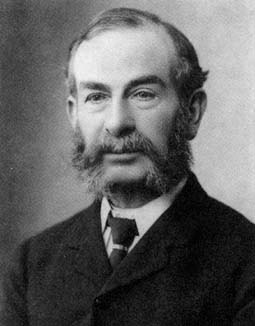
In classical mechanics, Routh's procedure or Routhian mechanics is a hybrid formulation of Lagrangian mechanics and Hamiltonian mechanics developed by Edward John Routh, who formulated it about 1860. Correspondingly, the Routhian is the function which replaces both the Lagrangian and Hamiltonian functions. Although Routhian mechanics is equivalent to Lagrangian mechanics and Hamiltonian mechanics, and introduces no new physics, it offers an alternative way to solve mechanical problems.
Originally created by Starwed
12/13/2005, 12:45:57 PM
Modified
4/28/2026, 11:07:02 AM
Recent revisions
/* growthexperiments-addlink-summary-summary:3|0|0 */
better source
[[Wikipedia:OABOT|Open access bot]]: url-access=subscription updated in citation with #oabot.
date
Improve flow
Lonk
Removing from [[Category:Theoretical physics]] already in subcat using [[c:Help:Cat-a-lot|Cat-a-lot]]
/* Central potential in spherical coordinates */
/* References */cite repair;
/* References */
sfn fix (date)
/* Symmetric mechanical systems */
rephrased the relation to other formulations of mechanics. Reason: Newtonian mechanics does not generally work for rigid bodies (it cannot deal with constraints), thus analytical mechanics is in this sense more general than Newtonian mechanics.
/* Equations of motion */
/* Classical charged particle in a uniform magnetic field */
Add: date. | You can [[WP:UCB|use this bot]] yourself. [[WP:DBUG|Report bugs here]]. | Suggested by Amigao | [[Category:Applied mathematics]] | via #UCB_Category
/* Examples */ Polish.
Reorganization.
